
HOW TO STAND OUT WHEN EVERYONE SOUNDS THE SAME
Ask an AI to pick a number between one and ten and it’ll almost always give you seven. Not because seven is correct, but because it’s the most common answer in everything it learned from. Most likely means most average. And that’s exactly the problem with how a lot of marketing is right now.
When everyone uses the same tools, trained on the same average of everything that’s already been said, everything becomes safe. Everyone starts to sound identical. The way to stand out isn’t to be louder or more polished. It’s to find the answer the tool would never give you, and say that instead.
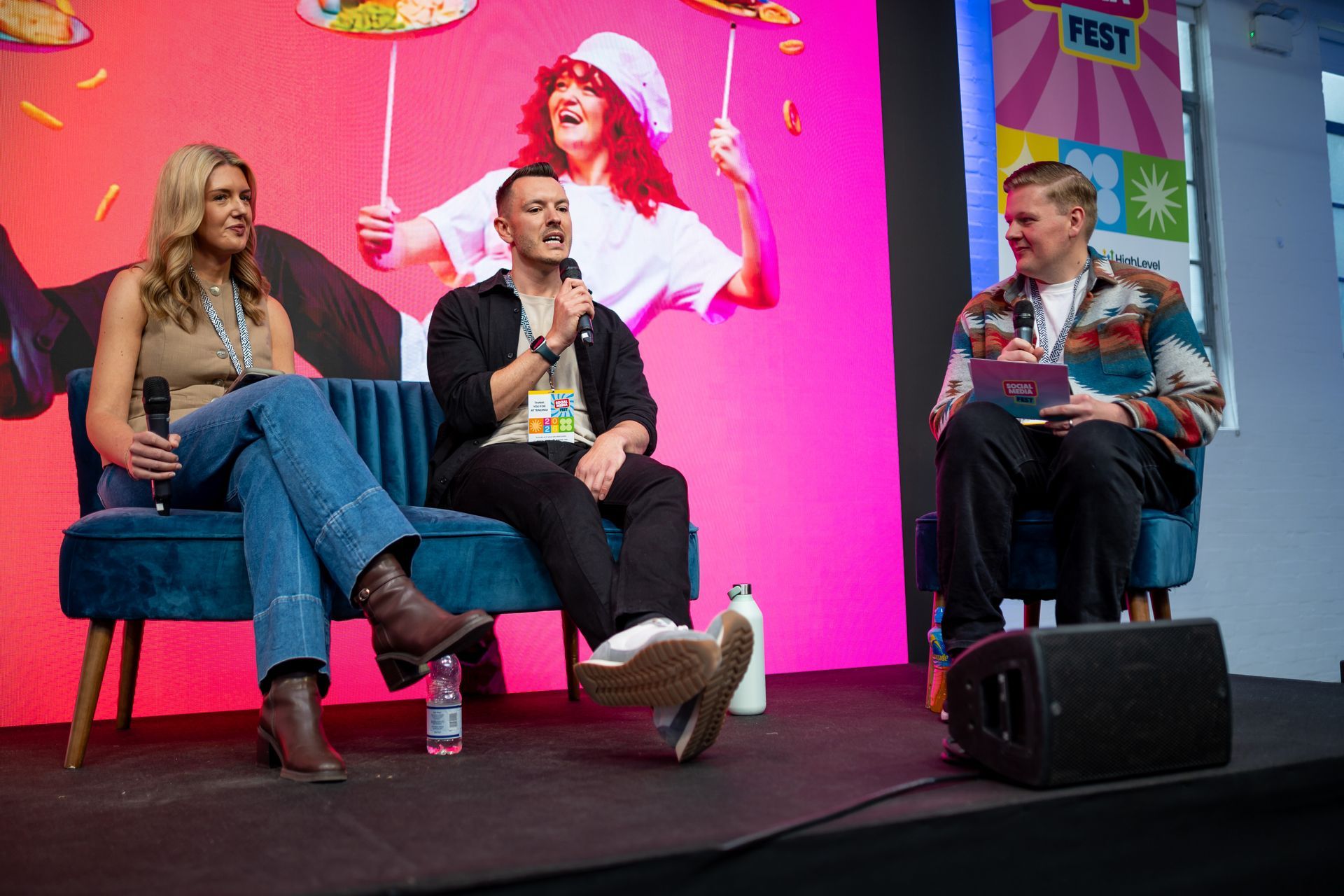
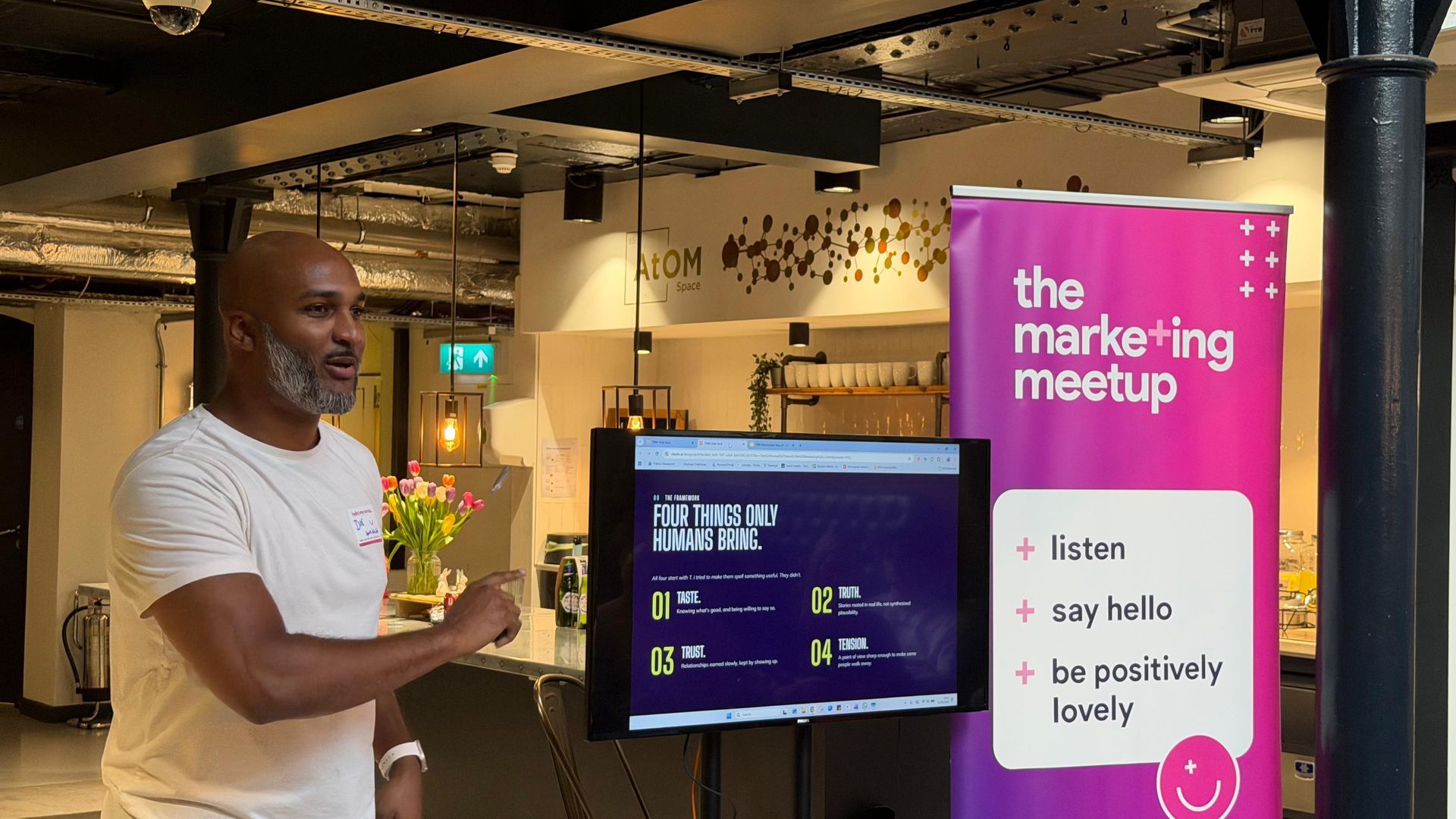
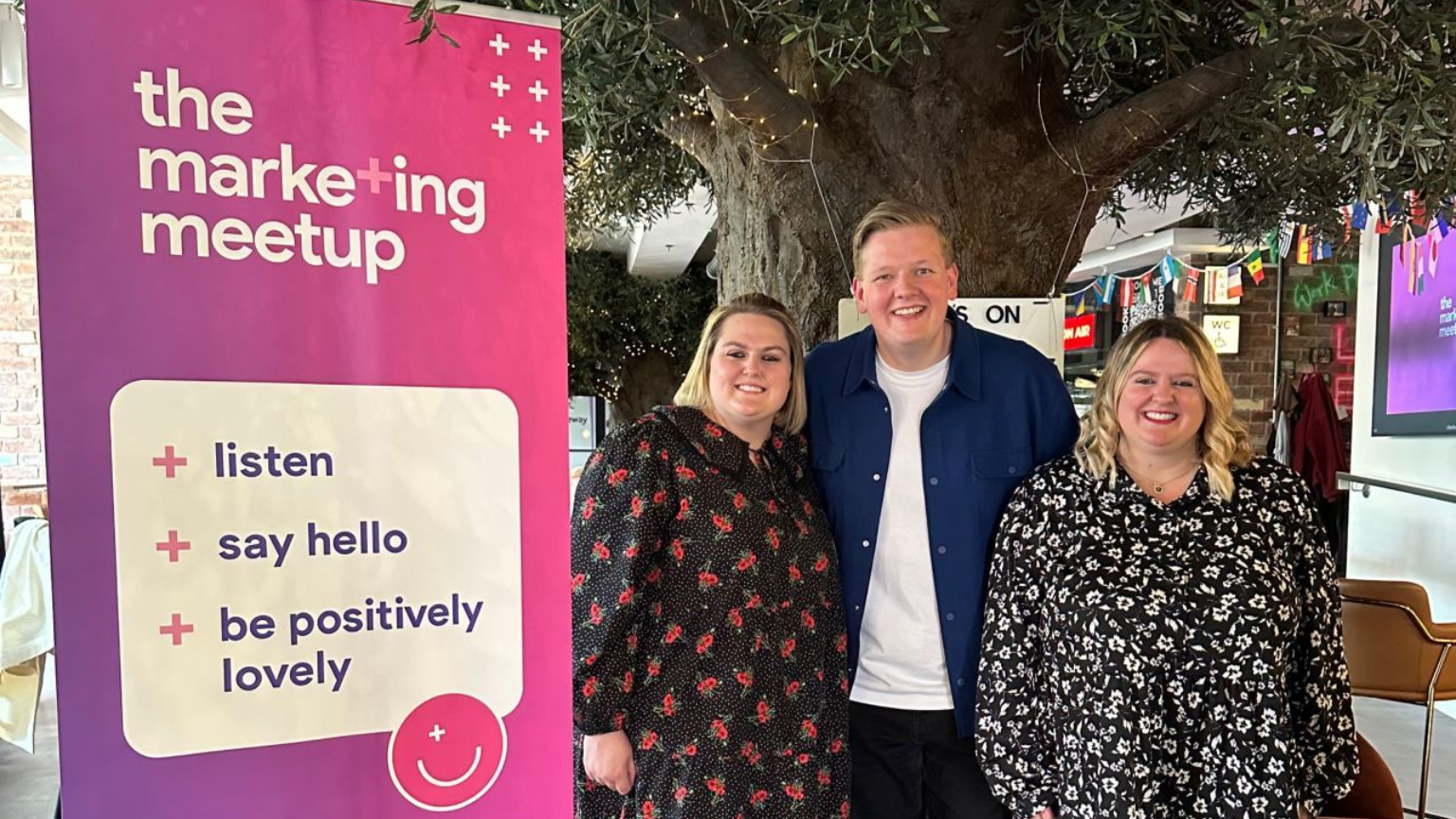
Our Client Growth Manager, Ollie McGrath, made this case at The Marketing Meetup Leamington last week, drawing on a career spent winning attention across radio, podcasts, social and some of the UK’s biggest events. The talk was called Stop Trying to Fit In. The argument underneath it is simple: in 2026, fitting in is the riskiest thing you can do.
Why does so much marketing suddenly sound the same?
AI tools don’t invent. They predict. ChatGPT or Claude will look at your questions and return the statistically most likely version, assembled from millions of examples of marketing that already exists.
That’s brilliant for speed and useless for distinction. The output is the middle of the road. When your competitor types a near-identical prompt into the same tool, they get the same bland suggestion back.
Layer that on top of years of brands optimising for legibility, performance metrics and playing it safe, and you get a category where everyone is technically saying the right thing in roughly the same voice. It might be correct but it’s completely forgettable.
Our co-founder Dré Picart has written about the same trap: AI didn’t make marketers more creative, it made them more cautious, A/B testing their way to the safe middle until the brave idea never gets picked.
Why being boring is the expensive option
If you’re in charge of your marketing budget, this is the part that should worry you. Dull, generic marketing doesn’t just fail to land. It will cost you money!
Research from Adam Morgan of eatbigfish, Peter Field and System1 found that a dull campaign in the UK costs roughly £10 million more in media spend to achieve the same commercial impact as an interesting one.
The same work found that 30 seconds of a cow chewing grass outperformed half the 100,000 ads in System1’s database. And 56% of people in the UK say they don’t feel emotionally connected to a single brand.
That’s why this is SO important. Blending in feels safe because nobody gets fired for the expected option. But blending in is the thing you’re paying millions to compensate for. The safest commercial move is to be worth noticing.
So how do you stand out on purpose?
Standing out isn’t a personality trait - it’s deliberate.
Start with who you’re actually talking to and what they care about, which is rarely your product. Then do the bit most people skip: write down every obvious answer. The lines every competitor would use, the ones an AI would suggest. That’’s the middle everyone else is heading for.
Then flip it. Take the expected approach and do the opposite on purpose. A surprise gets their attention and then the value you give them keeps it. You’ll then have something people will remember and act on.
How do you get a braver idea approved?
This is where most brave ideas die. Someone presents the fun out there idea and the room gets nervous, and it gets watered down to something safe.
The fix is to lead with the insight, not the creative. Don’t open with the wild idea. Open with the thinking that makes it the obvious conclusion.
Visually show the sea of sameness in your category to your bosses. I once did this for a client, I showed them 25 posts from different people in their category and they struggle to identity which post was ours.
You need to show them what dull costs. By the time you reveal the bold idea, it doesn’t look like a risk. It looks like the logical answer to a problem everyone in the room can now see.
How to start
Before you sign off your next piece of work, write down the obvious version first. The one a competitor or an AI would produce. Then ask whether what you’re about to do is meaningfully different from it. If it isn’t, you already know what to do.
The brands that win the next few years won’t be the ones who use the tools best, they’ll be the ones brave enough to stand for something.
Does this mean I should stop using AI for marketing?
No. AI is excellent for the groundwork: research, first drafts, variations, speed. The mistake is using it’s first answer, because that’s the average answer. Use it to map what everyone else will say, then make the deliberate choice to go somewhere it wouldn’t.
Isn’t being different just risky?
It feels risky, but the data points the other way. With dull work costing roughly £10 million more in media to land, and most ads failing to hold attention at all, blending in is the expensive bet. The risk sits with sameness, not distinctiveness.
How do I stand out without being weird for the sake of it?
Tie every bold move to a real insight about your audience, and make sure you’re providing your audience something useful at the end of it.
Want help finding the brave idea hiding in your category? That’s the kind of thinking our team does best. Get in touch.